

How to Select the Right Office Furniture Supplier for Command Centers in 2026
Command centers represent the nervous system of modern infrastructure, handling everything from emergency response to global cybersecurity. In these high-pressure environments, the physical workspace is not just a place to sit but a critical tool for operational success. Choosing a specialized office furniture supplier for command centers requires a deep understanding of 24/7 operational demands and technical requirements. Standard office furniture simply cannot withstand the rigors of continuous use or the heavy equipment loads typical in mission-critical hubs. This guide explores the essential factors procurement managers and project planners must consider when selecting a furniture partner for their control room projects in 2026.
✦
The Critical Role of Specialized Command Center Furniture
In 2026, the complexity of data monitoring has increased, making the role of the operator more demanding than ever. A command center is a mission-critical environment where downtime is not an option. Consequently, the furniture must be engineered for extreme durability and functionality.
An experienced office furniture supplier for command centers understands that these spaces operate 24 hours a day, 365 days a year. This constant occupancy leads to rapid wear and tear on standard furniture components. Specialized consoles are designed with heavy-duty materials to prevent structural failure.
Beyond durability, the furniture must support the massive technological load of the control room. This includes housing multiple CPUs, managing miles of cabling, and supporting heavy monitor arrays. The right supplier provides solutions that integrate these technical needs seamlessly into the workspace layout.
Safety is another paramount concern in command centers. High-quality furniture options prioritize fire-rated materials and stable structures that can support weight without tipping. These considerations ensure that the operators remain safe even in high-stress emergency situations.
Key Features to Look for in a Command Center Furniture Supplier
When evaluating a potential office furniture supplier for command centers, you must look beyond basic aesthetics. The best suppliers offer modular designs that can adapt to changing technology and personnel needs. Modularity allows for easy expansion or reconfiguration as the mission evolves.
Technical integration is a non-negotiable feature for modern control rooms. Look for suppliers who offer consoles with integrated power strips, data ports, and advanced cable management systems. These features keep the workspace organized and reduce the risk of accidental disconnections.
Equipment accessibility is equally important for maintenance teams. A well-designed console allows technicians to access CPUs and wiring without disrupting the operator. This is often achieved through ventilated cabinets and pull-out trays that simplify hardware upgrades.
Finally, consider the supplier capacity for customization. Every command center has unique spatial constraints and operational workflows. A supplier that can provide custom console lengths, specific monitor mounting solutions, and tailored finishes will provide a much better ROI over time.
Advanced Cable Management Systems
Effective cable management is the backbone of a functional command center. A specialized office furniture supplier for command centers will offer consoles with high-capacity cable raceways. These raceways separate power and data lines to prevent electromagnetic interference.
In 2026, many control rooms are adopting fiber optics and high-speed copper cabling. The furniture must provide adequate bend radii to protect these sensitive lines. Easy-access panels allow for quick troubleshooting and cable swaps during critical operations.
Monitor Mounting and Viewing Angles
Operators often need to monitor six or more screens simultaneously. The furniture supplier must provide robust monitor arms or slat-wall systems that can support significant weight. These systems should offer micro-adjustments for height, depth, and tilt.
Proper viewing angles are essential for reducing neck strain and eye fatigue. Suppliers who understand focal depth and sightline analysis will help you design a layout that maximizes operator awareness. This level of detail is what separates a professional supplier from a general furniture retailer.
Material Durability and 24/7 Construction Standards
Standard office desks are usually built with particle board and thin laminates designed for 40 hours of use per week. In contrast, command center furniture utilizes high-pressure laminates, solid surface materials, and heavy-gauge steel frames. These materials resist scratching, impact, and heat.
The edges of the consoles are high-wear areas. A quality office furniture supplier for command centers will use impact-resistant urethane edging. This prevents the edges from peeling or chipping when hit by chairs or equipment, extending the life of the furniture significantly.
Steel substructures provide the necessary stability for heavy equipment. These frames should be powder-coated for long-term corrosion resistance. A stable frame prevents monitor shake, which can be a major distraction for operators focusing on detailed data streams.
Consider the weight capacity of the work surfaces. In many dispatch or security hubs, the desk must support multiple large-format displays and specialized hardware. A reputable supplier will provide clear load-bearing specifications for all their console models.
| Feature | Standard Office Furniture | Command Center Furniture |
|---|---|---|
| Usage Rating | 8 hours / 5 days | 24 hours / 7 days / 365 days |
| Frame Material | Lightweight steel or wood | Heavy-gauge cold-rolled steel |
| Work Surface | Melamine / Particle board | High-pressure laminate / Compact grade |
| Cable Capacity | Minimal / Plastic grommets | High-capacity internal raceways |
| Monitor Support | Clamp-on arms | Integrated multi-tier arrays |
| Expected Lifespan | 3 to 5 years | 10 to 15 years |
Ergonomics and Operator Comfort for Long Shifts
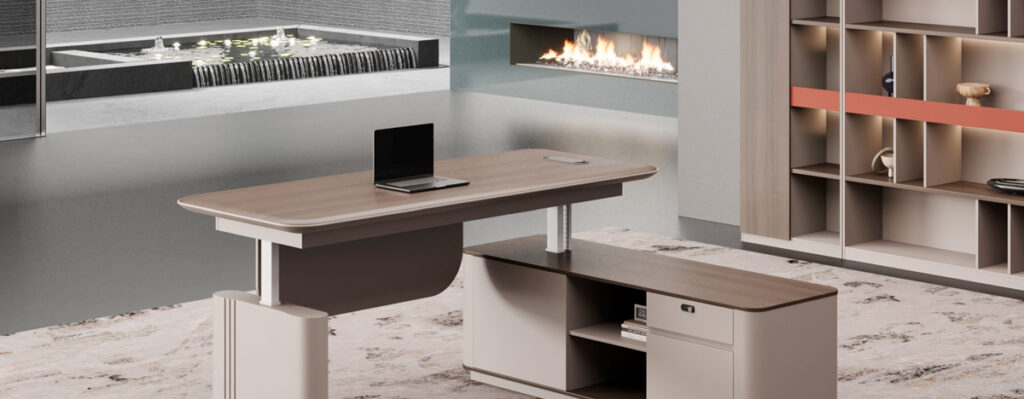
Operator fatigue is a significant risk factor in command centers. An office furniture supplier for command centers must prioritize ergonomics to maintain high levels of alertness. Sit-stand consoles have become the industry standard in 2026 for this reason.
Motorized height adjustment allows operators to change positions throughout their shift. This movement promotes circulation and reduces the risk of musculoskeletal disorders. The adjustment mechanisms must be quiet and smooth to avoid distracting other team members.
Seating is the other half of the ergonomic equation. 24/7 intensive-use chairs are designed with reinforced mechanisms and durable fabrics. These chairs offer multiple points of adjustment, including lumbar support, armrest height, and seat pan depth to accommodate different body types.
Lighting and acoustics also play a role in the ergonomic environment. Some suppliers offer integrated task lighting and acoustic privacy panels. These features help create a focused micro-environment for the operator, even in a busy and noisy control room.
Spatial Planning and Control Room Layout Design
A successful command center project starts with a detailed floor plan. The office furniture supplier for command centers should offer spatial planning services. This ensures that the layout facilitates communication while maintaining proper traffic flow and egress routes.
The placement of consoles must account for the location of the large-scale video wall. Sightline studies are conducted to ensure every operator has a clear view of the primary data displays. This prevents awkward postures and improves overall situational awareness for the team.
Maintenance access is a frequently overlooked aspect of layout design. There must be enough clearance behind the consoles for technicians to work comfortably. A professional supplier will help you balance the need for high operator density with the practicalities of hardware maintenance.
Modular furniture allows for curved, linear, or back-to-back configurations. Curved layouts are often preferred for individual focus, while open configurations support collaborative decision-making. The supplier should provide 3D renderings to help stakeholders visualize the final space.
Evaluating Supplier Reliability and Project Support
Choosing a supplier is a long-term partnership. You need a company that provides comprehensive support from the initial design phase through to installation and beyond. Check for a proven track record in mission-critical industries like aviation, utility, or defense.
Installation of command center furniture is a complex task. It involves coordinating with IT departments and electrical contractors. A reliable office furniture supplier for command centers will have their own certified installation teams who understand the nuances of technical furniture.
Warranty terms are a clear indicator of product quality. Look for suppliers offering at least a 10-year warranty on structural components and a substantial warranty on electronic parts like lift motors. This protects your investment against the inevitable wear of a 24/7 environment.
Lead times are another critical factor for project managers. Because many consoles are custom-built, lead times can range from 8 to 16 weeks. A transparent supplier will provide realistic timelines and regular updates to ensure the furniture arrives exactly when the site is ready.
Cost Considerations and Long-Term Value
While specialized command center furniture has a higher upfront cost than standard office desks, the total cost of ownership is much lower. Frequent replacements of cheap furniture lead to higher expenses and significant operational disruptions.
Investing in high-quality consoles reduces maintenance costs and increases employee retention. Operators who feel comfortable and supported are more likely to perform well and stay with the organization. This human factor is a major component of the long-term ROI.
Consider the future-proofing value of modular systems. As technology changes, you may only need to replace a monitor mount or a cable tray rather than the entire desk. A modular approach provided by a top-tier office furniture supplier for command centers saves money on future upgrades.
Request a detailed quote that includes shipping, taxes, and professional installation. Some suppliers also offer disposal services for old furniture, which can simplify the renovation process. Always compare the specifications of the materials rather than just the bottom-line price.
Building a Future-Ready Command Center
Selecting the right office furniture supplier for command centers is a decision that impacts the safety, efficiency, and longevity of your operations. By focusing on technical integration, 24/7 durability, and operator ergonomics, you create an environment where critical decisions can be made with confidence.
As we move through 2026, the integration of technology and furniture will only become more seamless. Partnering with a supplier that stays ahead of these trends ensures your facility remains functional for a decade or more. Prioritize quality and specialized expertise to guarantee a successful command center deployment.