

Office Furniture for Government Project: Task Load & BIFMA/EN Gate
High-traffic coworking floors expose residential-grade frames when procuring Office Furniture for Government Project without published commercial load ratings and mechanism cycle evidence. Buyers researching office furniture for government project abu dhabi need auditable quotes and compliance checkpoints. Acoustic pods and high-back collaborative seating need documented NRC targets—not residential lounge aesthetics alone. Partnering with an OEM-capable specialist like Office Furniture Wholesale connects MOQ tiers, color matching, and volume pricing to real project scopes. Explore commercial durability grades, UV/foam/hardware benchmarks, and OEM sample gates in this 2026 B2B procurement playbook.
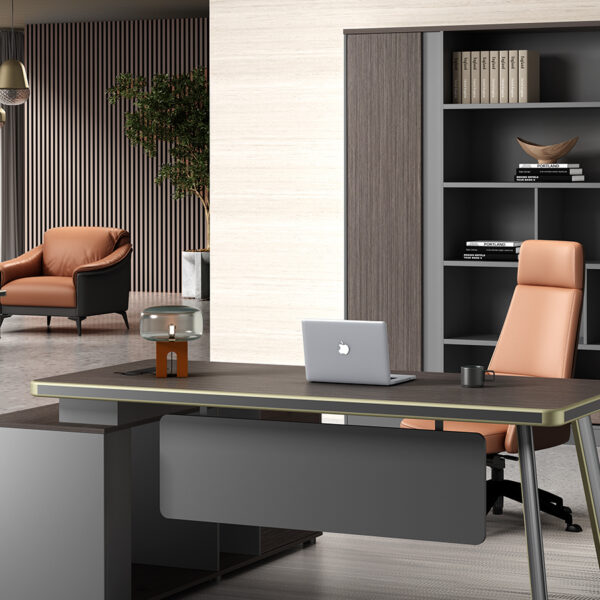
Key Takeaways
Lock commercial specs and Golden Sample approval before bulk cutting on office furniture for government project abu dhabi.
Confirm MOQ tiers, finish families, and AQL gates in the award sheet.
Validate KD packing and install dates — published lead times drift with materials.
How Do Commercial Office Furniture for Government Project Designs Meet Ergonomic Workstation Standards?
On Office Furniture for Government Project, commercial furniture programs win when duty-cycle specs, mesh density, and mechanism cycles are locked before RFQ. Buyers should require factories to confirm frame gauges, fabric rub counts, and sample lead times in writing so rework never arrives as silent invoice shock. Production buffers must sit beside cartonization plans so last-minute finish changes do not burn MOQ deposits. Keep named owners for sampling, QC, and packing on one shared brief. Reconfirm exception paths for finish mismatches before bulk cutting is finalized. Defend install windows with site-access notes, lift constraints, and phased delivery locks.
Government ministry fit-outs require rigorous ergonomic specifications that accommodate high-use shift operations, seated-to-standing flexibility, and certified lumbar support mechanisms. Task seating must adhere to sustained 8-hour daily use metrics, featuring synchronized tilt-tension controls, adjustable 3D armrests, and high-resilience molded foam cushions that resist sagging over extended lifecycles. For executive and operative desking layouts, integrated cable management spines and height-adjustable frames ensure operators maintain correct neutral-reach zones without compromising structural rigidity. To satisfy institutional procurement standards across public sector installations in the Emirates, frames are fabricated from heavy-gauge cold-rolled steel finished with low-VOC epoxy powder coating to withstand regional climate variations.
Work surface laminates incorporate high-pressure decorative laminate pressed onto E1-grade medium-density fiberboard core boards, providing scratch resistance and edge-banding integrity under heavy daily friction. Such material selections prevent premature wear in bustling government administrative bureaus. Supplier validation protocols mandate independent laboratory test reports for all adjustable gas lifts, swivel mechanisms, and castors before final factory approval. By enforcing rigorous ergonomic compliance at the design phase, procurement officers eliminate post-installation user complaints and ensure uniform comfort across multi-departmental administrative clusters, reducing long-term maintenance intervention frequencies significantly.
| Component | Standard Specification | Compliance Benchmark |
|---|---|---|
| Task Seating Mechanism | Synchronized tilt with multi-position lock | BIFMA X5.1 / EN 1335 |
| Work Surface Core | E1-grade MDF with HPL face | ISO 22196 antimicrobial finish |
| Steel Frame Gauge | Minimum 1.5mm cold-rolled steel | ASTM A1008 structural grade |
Common mistake: Skipping modular junction hardware that lets operators expand seating without new SKUs.
Risk alert: Non-replaceable cushions force full-set replacement after abrasion in shared zones.
What Spare-Parts and Color-Match Clauses Belong in a Office Furniture for Government Project MSA?
On Office Furniture for Government Project, landed-cost control depends on separating contractual unit prices from tooling deposits, exclusive fabric upcharges, and spare-parts kits before award. Teams should validate AQL gates, ISPM-15 wood packs, and KD load plans against install calendars so receiving delays do not silently convert into project storage fees. A written exception path for color ΔE failures and mechanism rejects keeps procurement from paying premium rework without an auditable alternative. Publish a rework path for finish mismatches so peak production awards stay auditable.
Finish-evidence risk on Office Furniture for Government Project rises when condition photos are assembled only after damage is discovered. Buyers should lock photo protocols at factory stuffing and delivery, and packing assumptions before award. Exception reports must tie carton counts, corner-board specs, and shade lots to the commercial invoice so recovery paths remain enforceable. Treat damage evidence readiness as an ops milestone, not a post-loss scramble. Defend install windows with site-access notes, lift constraints, and phased delivery locks.
Master Service Agreements for large-scale institutional supply require strict clauses guaranteeing identical color-batch consistency and continuous spare-parts availability for a minimum five-year window. Because government expansions happen in phased tranches, matching powder-coat RAL codes, wood veneer grain patterns, and proprietary fabric dye lots prevents mismatched layouts when departments expand into adjacent wings. Contracts must stipulate that any pigment or textile discontinuation requires a 90-day prior written notice and factory sample re-approval. The agreement must explicitly obligate the manufacturer to maintain a dedicated reserve stock of high-wear components, including gas cylinders, castors, control mechanisms, and hinge hardware, housed within regional distribution points or directly available for expedited factory dispatch.
| Spec Dimension | MFC / Particleboard | MDF | Solid Wood / Plywood |
|---|---|---|---|
| Core Structure | Cost-efficient panel for carcass & shelving | Dense uniform core for routed profiles | Premium frames, tabletops, exposed edges |
| Surface / Finish | Melamine or HPL laminate options | Paint, veneer, or HPL with PUR edge | Oil, lacquer, or natural grain sealers |
| Load / Stiffness | Good for static retail shelving loads | Higher screw-hold for hardware inserts | Best cyclic load for chairs & tables |
| Emissions Grade | E0 / CARB P2 / TSCA Title VI available | E0 / CARB P2 with sealed edges | Naturally low-VOC when unfinished |
Common mistake: Skipping caster class and glide specs on multi-floor office BOMs.
Risk alert: Cheap casters mark hard floors and seize on carpet under continuous rolling.
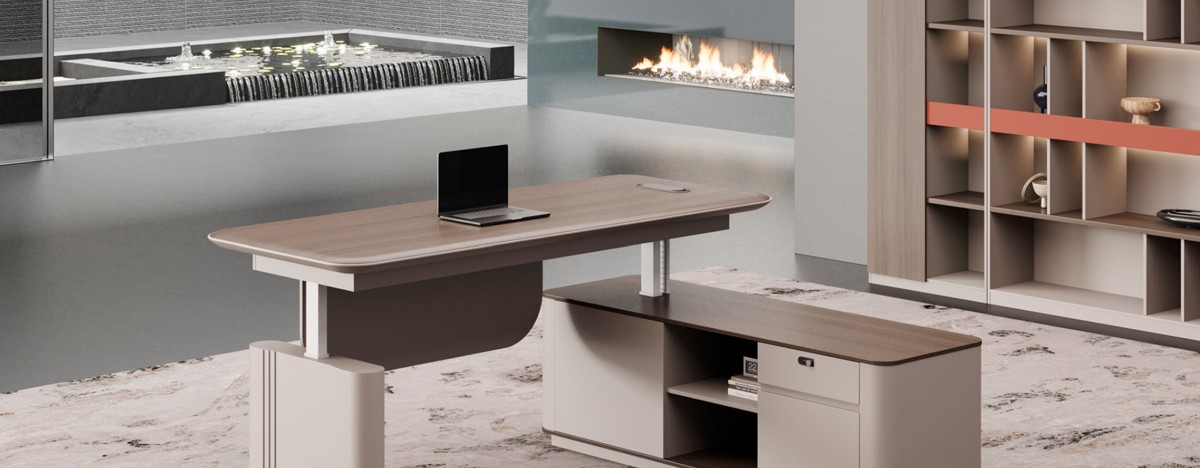
Which BIFMA X5.1 and EN 1335 Gates Apply to Bulk Office Furniture for Government Project Orders?
Passing international commercial standards is non-negotiable when deploying high-volume workstations in public sector buildings where durability and occupant safety are legally mandated. BIFMA X5.1 protocols subject general-purpose office chairs to severe drop tests, backrest strength trials, and swivel cycle tests exceeding 100,000 rotations, proving the structural integrity of the base, frame, and gas lift under heavy operational stress. Meanwhile, EN 1335 European standards govern dimensional adjustability, safety, and stability parameters for office work chairs. Desking systems and collaborative tables undergo separate structural evaluations, including concentrated load tests on work surfaces and cyclic leg-strength checks to ensure stability during dynamic daily use.
For Office Furniture for Government Project: keep warranty spare catalogs and site-access notes beside the Golden Sample approval—not after first occupancy. Publish a rework path for finish mismatches so peak production awards stay auditable.
Confirm owners for documents, equipment, and last-mile appointments in the same checklist used at weekly operations reviews.
Common mistake: Ordering non-matching modules that cannot share connectors across phases.
Risk alert: Fixed lounge footprints block flexible collaboration zones during peak events.
How Does Factory Flat-Pack Engineering Protect Office Furniture for Government Project Finish Quality?
Optimizing export freight economics requires sophisticated knocked-down engineering that reduces volumetric footprint without compromising the structural integrity or finish quality of delicate architectural surfaces. Factory packaging designs utilize custom high-density polyethylene foam edge protectors, corrugated honeycombed internal dividers, and multilayer carton boxes designed to withstand multi-modal transshipment stresses from factory floors in China to final installation sites in Abu Dhabi. Every desktop, modesty panel, and pedestal is engineered for tool-assisted cam-lock assembly on-site. Surface protection films are applied directly to high-gloss laminates and powder-coated metal elements to prevent abrasion from shifting cargo during ocean freight transit inside standard 40-foot high-cube containers.
On Office Furniture for Government Project, commercial furniture programs win when duty-cycle specs, mesh density, and mechanism cycles are locked before RFQ. Buyers should require factories to confirm frame gauges, fabric rub counts, and sample lead times in writing so rework never arrives as silent invoice shock. Production buffers must sit beside cartonization plans so last-minute finish changes do not burn MOQ deposits. Keep named owners for sampling, QC, and packing on one shared brief. Reconfirm exception paths for finish mismatches before bulk cutting is finalized.
On Office Furniture for Government Project, landed-cost control depends on separating contractual unit prices from tooling deposits, exclusive fabric upcharges, and spare-parts kits before award. Teams should validate AQL gates, ISPM-15 wood packs, and KD load plans against install calendars so receiving delays do not silently convert into project storage fees. A written exception path for color ΔE failures and mechanism rejects keeps procurement from paying premium rework without an auditable alternative.
Common mistake: Mixing soft cushions with hard frames without moisture barriers in the same stack.
Risk alert: Stuffing to theoretical maximum CBM leaves no bracing clearance and crushes finishes.
What Sample Lead Times and Tooling Deposits Apply to Office Furniture for Government Project Pilots?
Manufacturers enforce these financial structures to offset the capital expense of steel stamping dies, high-density foam molds, and specialized laminate presses. Clear contractual clauses must govern who retains ownership of these steel dies, ensuring future reorder compatibility without requiring brand-new tooling investments down the road. Delaying prototype sign-offs directly jeopardizes project delivery schedules, often triggering premium expedited spare-parts shipping costs if anchor tenants or ministries demand immediate handover. Procurement leads should lock in a strict sample submission window within the master purchase agreement, specifying exact penalty terms for off-spec dimensional tolerances or substandard finish applications. Establishing these protocol milestones early prevents costly disputes before factory floor mass-production schedules get locked in.
Procuring custom seating frames and modular desking modules for municipal administrative centers requires strict timeline management starting from prototype approval. Standard bespoke samples typically demand fifteen to twenty-five working days from CAD sign-off, depending on whether extrusion dies or custom injection molds are needed for wire-management channels and structural modesty panels. Buyers must account for material sourcing delays, color-matching runs against official state palettes, and overseas air-courier transits before final physical sign-off occurs. Tooling deposits for government-tier projects are normally structured around a 50 percent upfront tooling release, with the remaining balance credited back once cumulative bulk production hits agreed milestone thresholds.
For Office Furniture for Government Project: itemize mechanism cycle ratings and EN evidence on one RFQ line so silent substitutions cannot land as invoice shock.
Common mistake: Comparing supplier quotes without aligning sample, production, and packing stages.
Risk alert: Aggressive MOQ cuts without tooling amortization inflate unit cost later.
Why Do Buyers Spec Office Furniture for Government Project Against Real Duty-Cycle Wear in Open Offices?
Open-plan government bureaus and public service halls subject commercial seating and desking systems to relentless twelve-hour daily duty cycles, far exceeding typical residential or light commercial thresholds. Procurement teams drafting specifications for high-traffic environments must mandate heavy-gauge cold-rolled steel frames, commercial-grade synchronous tilt mechanisms, and high-resilience molded foam cushions that resist sagging under continuous usage. Ignoring these structural criteria invariably leads to premature hydraulic cylinder failures, wobbly table joints, and shredded upholstery within the first eighteen months of operation. Surface durability requires rigorous scratch, stain, and chemical resistance testing to withstand aggressive daily janitorial sanitation protocols using industrial disinfectants.
High-pressure laminates and thermally fused melamine surfaces must meet stringent scratch-resistance ratings to prevent scarring from laptops, folders, and heavy filing trays. Additionally, edge-banding must be applied via PUR (polyurethane) adhesives to withstand humidity variations and prevent peeling along high-impact desk perimeters. Ergonomic compliance in government environments directly correlates with staff productivity and reduced musculoskeletal injury claims among administrative clerks. Specifications must demand multi-adjustable 3D or 4D armrests, pneumatic height adjustments with certified load ratings, and synchro-tilt seat pans that encourage dynamic movement during long shifts.
| Component Category | Minimum Duty-Cycle Benchmark | Acceptable Standard / Test Method |
|---|---|---|
| Task Chair Mechanisms | 12-year continuous shift rating | BIFMA X5.1 Section 11 (Seating Durability) |
| Desking Frame Steel | Minimum 1.5mm cold-rolled steel | ISO 9001 Structural Load Verification |
| Upholstery Fabric | 100,000 double rubs (Wyzenbeek) | ASTM D4157 Heavy-Duty Commercial Grade |
| Worksurface Laminate | High-Pressure Laminate (HPL) | NEMA LD 3-2005 Wear and Scratch Resistance |
Common mistake: Omitting bagged, labeled fitting kits tied to each KD carton.
Risk alert: Hardware bags left loose rust and go missing before site assembly.
What Line-Audit Checklist Predicts Reliable Office Furniture for Government Project Reorder Slots?
Securing dedicated production line capacity for ongoing institutional rollouts requires systematic factory audits that evaluate raw material inventory control, welding robot calibration, and powder-coating line consistency. Reliable OEM suppliers maintain redundant stamping machines and pre-sorted timber cores to prevent bottlenecks when sudden ministry expansion phases require identical workstation configurations months after initial delivery. A comprehensive line audit reviews shift-handover logs, preventative maintenance schedules for CNC routers, and real-time scrap rate tracking. Quality control checkpoints must be embedded directly into the assembly workflow, transitioning from raw steel tube cutting through to sub-assembly welding and final hardware bagging.
Auditors verify that line operators utilize calibrated torque wrenches for structural fastener assembly and maintain clear traceability tags on every batch of dyed fabric or molded foam. Factories lacking digital traceability systems often struggle with color-batch discrepancies between initial container shipments and subsequent fill-in orders. Packaging and kitting stations represent the final operational hurdle before goods reach export container stuffing bays. An effective line audit inspects corner-guard application, heavy-duty double-wall corrugated carton specifications, and moisture-barrier film wrapping to survive maritime transport environments. Confirming these packaging standards during factory walk-throughs ensures that knock-down subcomponents arrive at destination warehouses pristine and ready for rapid field assembly.
Common mistake: Omitting floor, lift, and time-window constraints from the delivery brief.
Risk alert: Addresses without loading access need staged floor handoffs and spare install kits.
How Should Buyers Audit OEM Capacity Before Scaling Office Furniture for Government Project Reorders?
Procurement officers need visibility into the OEM’s tier-one supplier relationships for specialty hardware, pneumatic cylinders, and electrical power-module components used in executive boardroom tables and modular benching systems. Factories with diversified raw material suppliers are better insulated against sudden material price spikes or regional component shortages. Technical engineering support capability distinguishes a dependable manufacturing partner from a basic assembly workshop. The factory must employ dedicated industrial engineers capable of reviewing complex architectural floor plans, optimizing modular layouts, and generating rapid 3D shop drawings for ministerial sign-off. Verifying in-house prototyping speed and engineering competence ensures that project adjustments are handled smoothly without stalling the broader manufacturing pipeline.
Evaluating an original equipment manufacturer for large-scale institutional supply contracts demands a deep dive into floor space utilization, skilled labor retention, and daily output ceilings. Buyers should review historical throughput data across similar high-volume commercial contracts, verifying that the factory can absorb a sudden surge in order volume without compromising lead times or diverting resources from active manufacturing runs. Subcontracted sub-assembly operations must also be scrutinized for compliance with primary quality control agreements. Financial stability and supply chain resilience form the backbone of any reliable long-term manufacturing partnership.
Common mistake: Locking MOQ and colorways verbally without signed finish boards and BOM.
Risk alert: Starting bulk production before written PP sample approval triggers costly rework.
Decision Framework
By volume: Map MOQ tiers and SKU mix before award—mixed lounge and seating orders need aligned finish families and KD carton plans for Office Furniture for Government Project.
By speed: Prototype approval (10–18 days) gates bulk production; rush awards without signed samples reset tooling and MOQ economics on Office Furniture for Government Project.
By cargo profile: Flag fire/safety marks (BIFMA, EN 16139, and market-relevant fire/composite-wood evidence) before production—not after export packing.
Real-World Corridor Case Studies
A distributor’s first import used flat-pack KD cartons to lift 40HQ utilization without pre-assembled air. Carton dims, ISPM-15 corner boards, and hardware kit labeling were verified against the stuffing plan. Our engineering team aligned site-access and floor-staging notes so CBD stores without loading bays could receive without re-delivery fees.
A flexible workspace operator ordered mixed lounge modules with logo embroidery and two finish families. Tooling amortization and MOQ tiers were written into the award sheet before deposit. Our engineering team kept modular junction hardware consistent so future expansion bays matched the first install.
Execution Checklist for Office Furniture for Government Project
Lock commercial durability specs, OEM samples, and compliance packs before authorizing bulk production on Office Furniture for Government Project.
Validate KD carton plans, AQL evidence, and install-date buffers so project rollouts stay intact. Keep this checklist handy when advancing a office furniture for government project abu dhabi.
Process and Checkpoints
CAD Sign-off & Finish Lock
Freeze floor plans, seating counts, fabric/color codes, and CAD drawings before any Golden Sample for Office Furniture for Government Project.
Pre-Production Golden Sample
Approve PP/Golden Sample for frame gauge, mechanism cycles, fabric rub counts, and hardware grades tied to Office Furniture for Government Project before bulk deposit.
Incoming Material Inspection
Verify steel/foam/fabric/timber lots, moisture targets, and finish batches against the signed BOM for Office Furniture for Government Project.
In-Line Production Patrol
Run weld, powder-coat, cushion, and joinery patrols against the commercial BOM during bulk production of Office Furniture for Government Project.
AQL Pre-Shipment Audit
Execute AQL 2.5 (or project-specified) final inspection with photo/video evidence before export packing for Office Furniture for Government Project.
KD Stuffing Oversight
Supervise carton dims, corner protection, and 40HQ cube targets so Office Furniture for Government Project KD loads leave the factory undamaged.
Confirm the right route for your shipment
Need a scoped factory quote on Office Furniture for Government Project? Share finish codes, MOQ targets, and install dates for a commercial furniture proposal. Get a Quote
Request a route reviewFrequently Asked Questions
Which fire and safety documents matter for commercial furniture projects?
Ask for EN 13501 / EN 1021 / EN 16139 evidence plus REACH composite-wood documentation before bulk seating or casegoods ship to the EU market.
What joint construction details matter on modular office lounge and bench frames?
Look for reinforced weld or mechanical connectors with alignment pins so modules stay square after repeated reconfiguration—and request spare connectors in the spare kit.
How can hospitality buyers keep powder-coat and wood-grain finishes consistent across SKUs?
Issue Pantone / RAL codes with gloss range, require panel retainers from the same coating batch, and reject mixed-batch frames that shift under office lighting.
How should B2B buyers control color variance across furniture production lots?
Approve a sealed master swatch, write ΔE tolerance bands into the PO, and require lot-by-lot shade cards before bulk cutting so upholstery and powder coats match.
When do buyers compare BIFMA versus EN furniture test standards on commercial seating?
U.S. office and contract seating often references BIFMA X5 series; EU projects lean on EN 1335 / EN 16139. Map the destination market before accepting a factory lab report.
How does commercial-grade office furniture differ from residential desk sets?
Commercial grade emphasizes higher cycle ratings, thicker frames, replaceable parts, and modular expansion—residential sets optimize price and appearance for private homes.
Unit pricing, MOQ tiers, and lead times move with raw-material indexes and finish-approval cycles. Confirm a scoped factory quote after sample sign-off.
This guide is commercial furniture procurement education, not legal or contract advice. Validate fire/safety marks for your destination market.