

Workspace Furniture Fit Out: MOQ Tiers & Sample Lock
Mixed-SKU office fit-outs stall when Workspace Furniture Fit Out assortments lack modular connectors and aligned finish families across lounge and desking lines. Modular workstation lines require aligned power/USB modules and cable trays that meet destination electrical listings before bulk production. Collaborating with a dedicated commercial furniture partner like Office Furniture Wholesale aligns material grades, OEM samples, and project award timelines. Use this 2026 SOP checklist to lock finishes, sample approvals, compliance packs, and site-access notes before award.
Key Takeaways
Lock commercial specs and Golden Sample approval before bulk cutting on workspace furniture fit out.
Confirm MOQ tiers, finish families, and AQL gates in the award sheet.
Validate KD packing and install dates — published lead times drift with materials.
What Spare-Parts and Color-Match Clauses Belong in a Workspace Furniture Fit Out MSA?
Master Service Agreements must mandate a dedicated spare-parts inventory buffer, typically calculated at three percent of the total unit volume for high-wear components like casters and pneumatic cylinders. This preemptive alignment prevents significant delays when minor hardware failures threaten the operational timeline of a large-scale international workspace furniture fit out project. Color-match consistency relies on strict adherence to master color swatches verified during the pre-production phase and documented within the formal packing list. Contracts should stipulate that any deviation beyond a Delta E tolerance of 1.5 triggers an automatic batch rejection, forcing the manufacturer to bear the burden of replacement shipping costs.
On Workspace Furniture Fit Out, landed-cost control depends on separating contractual unit prices from tooling deposits, exclusive fabric upcharges, and spare-parts kits before award. Teams should validate AQL gates, ISPM-15 wood packs, and KD load plans against install calendars so receiving delays do not silently convert into project storage fees. A written exception path for color ΔE failures and mechanism rejects keeps procurement from paying premium rework without an auditable alternative. Defend install windows with site-access notes, lift constraints, and phased delivery locks.
Finish-evidence risk on Workspace Furniture Fit Out rises when condition photos are assembled only after damage is discovered. Buyers should lock photo protocols at factory stuffing and delivery, and packing assumptions before award. Exception reports must tie carton counts, corner-board specs, and shade lots to the commercial invoice so recovery paths remain enforceable. Treat damage evidence readiness as an ops milestone, not a post-loss scramble. Itemize mechanism cycles, mesh density, and fabric rub counts so RFQs never hide spec gaps.
| Spec Dimension | MFC / Particleboard | MDF | Solid Wood / Plywood |
|---|---|---|---|
| Core Structure | Cost-efficient panel for carcass & shelving | Dense uniform core for routed profiles | Premium frames, tabletops, exposed edges |
| Surface / Finish | Melamine or HPL laminate options | Paint, veneer, or HPL with PUR edge | Oil, lacquer, or natural grain sealers |
| Load / Stiffness | Good for static retail shelving loads | Higher screw-hold for hardware inserts | Best cyclic load for chairs & tables |
| Emissions Grade | E0 / CARB P2 / TSCA Title VI available | E0 / CARB P2 with sealed edges | Naturally low-VOC when unfinished |
Common mistake: Ordering non-matching modules that cannot share connectors across phases.
Risk alert: Fixed lounge footprints block flexible collaboration zones during peak events.
What MOQ Tiers and KD Carton Plans Fit Wholesale Workspace Furniture Fit Out Programs?
Optimizing Minimum Order Quantity tiers requires a strategic balance between volume discounts and the physical constraints of ocean freight container utilization. For wholesale workspace furniture fit out programs, buyers should structure tiers that align with full container load capacities, ensuring that every shipment maximizes internal cube space while adhering to SOLAS weight verification protocols. This approach reduces the per-unit shipping cost significantly, allowing procurement teams to allocate more budget toward high-quality materials rather than inefficient logistics overhead. Knock-down carton plans must prioritize structural integrity and stacking density to survive the rigors of global maritime transit. By designing packaging that conforms to modular dimensions, manufacturers can achieve higher pallet utilization, which simplifies the assembly of the packing list and reduces handling time at the destination port.
Effective KD planning integrates protective interior dunnage that minimizes the need for excess void fill, thereby reducing both shipping volume and environmental impact. When negotiating with suppliers, include requirements for flat-pack efficiency that allow for rapid installation at the final site, which is critical for meeting tight project deadlines. Buyers should pre-book KD cartonization against elevator constraints and confirm warehouse or floor staging before waves leave origin. Dual appointments, weekend blackout rules, and spare glide kits must sit on the same checklist as finish approval. Treat floor-to-floor handoffs as a controllable cost driver rather than an opaque last-mile surcharge. Itemize mechanism cycles, mesh density, and fabric rub counts so RFQs never hide spec gaps.
For Workspace Furniture Fit Out: lock finish boards, AQL photo packs, and named packing owners before the bulk deposit clears so install calendars stay enforceable.
Common mistake: Planning seating counts without aisle widths and emergency egress paths.
Risk alert: Overcrowded workstation layouts violate circulation clearances for accessibility.
How Can Facility Managers Spec Modular Workspace Furniture Fit Out for Coworking Fit-Outs?
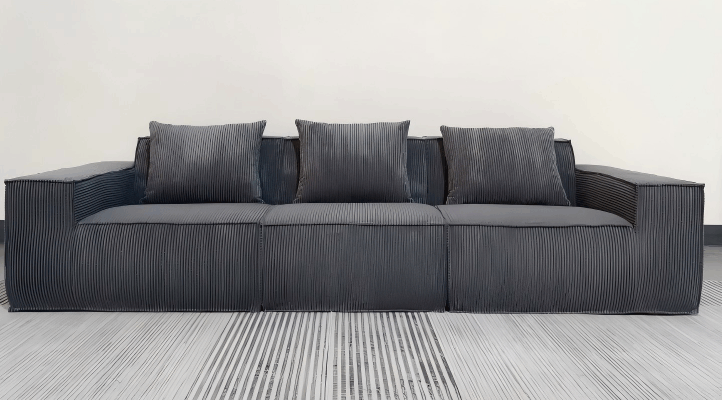
Specifying modular furniture for coworking environments necessitates a focus on infinite reconfigurability without compromising structural stability or safety standards. Facility managers should prioritize systems that utilize universal connection points, enabling rapid layout changes as tenant demands evolve throughout the building’s lifecycle. All specifications must be cross-referenced against the Commercial Invoice and packing specification to ensure that every modular component is accounted for during the initial fit out phase, preventing future inventory gaps during expansion or maintenance cycles. When selecting modular systems, assess the compatibility of power and data integration features with the building’s core infrastructure.
Modular furniture must be designed to interface seamlessly with existing floor boxes and wall-mounted outlets, adhering to the safety guidelines established by Universal Trade Standards. To maintain long-term operational flexibility, mandate that all modular components include comprehensive documentation and assembly guides that are easily accessible to on-site maintenance teams. This documentation should be archived alongside the original packing list to streamline future reconfigurations or repairs as the workspace density changes. By implementing these rigorous specification standards during the procurement phase, facility managers minimize downtime and ensure that the furniture fit out remains a resilient, multifunctional asset across diverse global coworking markets.
| Standard / Protocol | What It Validates | Typical Cycle / Gate | Buyer Checkpoint |
|---|---|---|---|
| BIFMA X5 / Level marks | Commercial structural durability (destination-agnostic baseline) | 100k–300k cycle fatigue bands | Request test report + batch sample ID |
| ISO 9001 / factory QMS | Process control and corrective-action discipline | Valid certificate + audit scope match | Verify scope covers the SKU family on award |
| FSC / PEFC + E0/E1 core | Responsible wood + low-VOC composite emissions | Chain-of-custody + mill certs per lot | Reject unlabelled core lots at IQC |
| AQL 2.5 Pre-Shipment | Lot quality sampling before ship | Major/minor defect counts per lot size | Hold deposit until AQL pack signed |
Common mistake: Buying a single SKU family when the brief needs modular reconfiguration.
Risk alert: One-size lounge sets fail mixed coworking zones that need lounge + focus mixes.
How Should Buyers Audit OEM Capacity Before Scaling Workspace Furniture Fit Out Reorders?
Auditing OEM capacity requires a granular review of production throughput, raw material sourcing, and the current adherence to Universal Trade Standards. Capacity assessment should also encompass the manufacturer’s ability to scale their labor force and utilize automated machinery without compromising the quality of the workspace furniture fit out. Requesting a history of lead-time performance and identifying any past deviations in the packing specification or packing list accuracy provides insight into operational reliability. Buyers should demand transparency regarding the supplier’s supply chain, ensuring that key components are readily available to prevent production stalls that could disrupt the overall fit out schedule. The audit should culminate in a site visit or a virtual tour that focuses on quality control nodes and the efficiency of the packaging lines.
On Workspace Furniture Fit Out, commercial furniture programs win when duty-cycle specs, mesh density, and mechanism cycles are locked before RFQ. Buyers should require factories to confirm frame gauges, fabric rub counts, and sample lead times in writing so rework never arrives as silent invoice shock. Production buffers must sit beside cartonization plans so last-minute finish changes do not burn MOQ deposits. Keep named owners for sampling, QC, and packing on one shared brief. Reconfirm exception paths for finish mismatches before bulk cutting is finalized.
On Workspace Furniture Fit Out, landed-cost control depends on separating contractual unit prices from tooling deposits, exclusive fabric upcharges, and spare-parts kits before award. Teams should validate AQL gates, ISPM-15 wood packs, and KD load plans against install calendars so receiving delays do not silently convert into project storage fees. A written exception path for color ΔE failures and mechanism rejects keeps procurement from paying premium rework without an auditable alternative.
Common mistake: Locking MOQ and colorways verbally without signed finish boards and BOM.
Risk alert: Starting bulk production before written PP sample approval triggers costly rework.
How Can Nested Cartonization Cut Damage Claims on Workspace Furniture Fit Out Waves?
Nested cartonization significantly reduces volumetric weight and structural stress by allowing workstation components to stack in a geometric hierarchy, minimizing internal movement during ocean transit. By utilizing custom-molded inserts that align with specific table leg profiles and desk frame geometries, logistics managers ensure that high-density components do not compromise the integrity of lighter acoustic panels or fabric screens. This operational precision directly reduces the frequency of edge-crush damage that often plagues bulk furniture shipments across global sea lanes.
To execute this strategy, exporters must mandate that manufacturers utilize high-test double-wall corrugated cardboard specifically rated for the gross weight of the nested assembly. Each carton must undergo a drop-test validation at the factory floor to ensure that the nested configuration can withstand the mechanical pressures of container stacking during long-haul maritime routes. Implementing these protective measures requires a meticulous review of the Commercial Invoice and Packing List to verify that the piece count aligns with the container weight distribution limits.
When furniture fit out waves involve high-value modular components, nested cartonization serves as the first line of defense against transit-related liability. By standardizing the packaging footprints, warehouse teams can optimize pallet utilization, which decreases the overall footprint while simultaneously lowering the probability of shifting loads. This approach effectively bridges the gap between factory-level protective packaging and final-mile delivery, ensuring that every workstation arrives in pristine condition regardless of the distance from the original Global to the destination site.
| Pack Configuration | CBM / Set (KD) | Gross Weight Band | 40HQ Quantity Hint |
|---|---|---|---|
| Chair / stool (nested KD carton) | 0.08–0.18 CBM | 8–16 kg / set | 350–700 sets / 40HQ |
| Dining / conference table (split top + legs) | 0.25–0.55 CBM | 28–55 kg / set | 110–220 sets / 40HQ |
| Casegoods / storage (flat panels + hardware) | 0.35–0.75 CBM | 35–70 kg / set | 85–170 sets / 40HQ |
| Lounge / sofa (KD frame + loose cushions) | 0.55–1.10 CBM | 45–90 kg / set | 55–110 sets / 40HQ |
Common mistake: Approving finishes from photos alone without coating system and thickness notes.
Risk alert: Thin powder coats chip and expose steel to corrosion in high-touch shared zones.
What Warranty Coverage Should Buyers Require When Sourcing Workspace Furniture Fit Out?
Comprehensive warranty coverage for workspace furniture fit out must move beyond superficial material guarantees to include structural performance benchmarks under heavy commercial usage. Buyers should insist on a minimum five-year structural warranty that specifically covers mechanical failure in height-adjustable desk actuators, caster integrity, and the long-term durability of laminate finishes. In the context of global procurement, the warranty must be enforceable against the manufacturing entity, with clear protocols for obtaining replacement components without incurring excessive international shipping costs or duty re-entry fees.
Agreements should explicitly define the procedure for filing claims, requiring the manufacturer to provide a detailed replacement schedule that aligns with the original project timelines. Given the reliance on Universal Trade Standards, the contract should specify that the manufacturer bears the burden of proof for manufacturing defects, while the buyer remains responsible for reporting damage upon arrival via the packing specification documentation. Successful warranty management hinges on the inclusion of a batch-traceability clause, allowing buyers to identify the specific production run if a recurring defect appears across multiple workstations. By maintaining a centralized log of all serial numbers linked to the original Commercial Invoice, facility managers can streamline the claims process and demand remediation from the OEM.
For Workspace Furniture Fit Out: itemize mechanism cycle ratings and EN evidence on one RFQ line so silent substitutions cannot land as invoice shock.
Common mistake: Skipping published weight-capacity labels on task chairs and conference frames.
Risk alert: Undocumented load ratings expose operators to injury claims in shared spaces.
How Should IT and Facilities Align Raceway Specs Around Workspace Furniture Fit Out?
Aligning IT infrastructure with furniture fit out requires early-stage integration of cable management raceways into the desk frame design to ensure seamless connectivity for modern work environments. Facilities managers must verify that the internal dimensions of the furniture raceways accommodate specific data cabling requirements, power modules, and localized UPS units without causing thermal buildup. This technical alignment prevents costly onsite modifications that frequently occur when generic wholesale furniture is deployed without considering the specific density of the building’s electrical and data backbone.
During the procurement phase, the technical specifications for these raceways must be cross-referenced with the local building codes and the Universal Trade Standards applicable to the destination region. Buyers must confirm that the power distribution units provided by the furniture manufacturer comply with regional plug standards and voltage regulations to avoid non-compliance issues during final installation. Documentation of these requirements should be clearly stated in the procurement request to ensure that the factory-integrated cabling systems meet the operational needs of the end-user facility.
Effective coordination between IT teams and furniture suppliers minimizes the risk of installation delays caused by incompatible hardware interfaces or insufficient clearance for cable routing. By conducting a pre-shipment audit of the furniture’s internal wiring channels, teams can identify potential bottlenecks before the cargo leaves the Global. This level of technical due diligence ensures that the workspace furniture fit out functions as a cohesive system, allowing for rapid deployment and easy maintenance throughout the lifecycle of the office environment.
Common mistake: Omitting floor, lift, and time-window constraints from the delivery brief.
Risk alert: Addresses without loading access need staged floor handoffs and spare install kits.
What Line-Audit Checklist Predicts Reliable Workspace Furniture Fit Out Reorder Slots?
A robust line-audit checklist serves as the primary tool for predicting the reliability of reorder slots, focusing on the manufacturer’s current production capacity, raw material inventory levels, and labor throughput. Real-time assessment of these metrics allows buyers to identify potential capacity constraints before they impact delivery schedules, ensuring that future fit out waves remain synchronized with project milestones. By auditing the factory’s quality control logs against historical output data, buyers can gain a transparent view into the reliability of the supply chain.
The checklist should include a verification of the manufacturer’s ability to maintain a consistent packing specification issuance process, as administrative bottlenecks at the origin Global often mirror production delays. Predicting reliable reorder slots requires a quantitative approach to audit, where key performance indicators are mapped against the manufacturer’s lead-time benchmarks. Factors such as the availability of specialized raw materials and the stability of the local freight licensing landscape must be integrated into the risk assessment model. By systematically monitoring these control points, buyers can secure priority slots in the production cycle, effectively safeguarding their supply chain against the volatility inherent in wholesale furniture procurement and international logistics operations.
Common mistake: Planning only on cargo ETA while ignoring dock, lift, and after-hours access windows.
Risk alert: Incomplete site-access briefs erase install windows on multi-floor office projects.
Decision Framework
By volume: Map MOQ tiers and SKU mix before award—mixed lounge and seating orders need aligned finish families and KD carton plans for Workspace Furniture Fit Out.
By speed: Prototype approval (10–18 days) gates bulk production; rush awards without signed samples reset tooling and MOQ economics on Workspace Furniture Fit Out.
By cargo profile: Flag fire/safety marks (BIFMA, EN 16139, and market-relevant fire/composite-wood evidence) before production—not after export packing.
Real-World Corridor Case Studies
A flexible workspace operator ordered mixed lounge modules with logo embroidery and two finish families. Tooling amortization and MOQ tiers were written into the award sheet before deposit. Our engineering team kept modular junction hardware consistent so future expansion bays matched the first install.
A distributor’s first import used flat-pack KD cartons to lift 40HQ utilization without pre-assembled air. Carton dims, ISPM-15 corner boards, and hardware kit labeling were verified against the stuffing plan. Our engineering team aligned site-access and floor-staging notes so CBD stores without loading bays could receive without re-delivery fees.
Execution Checklist for Workspace Furniture Fit Out
Lock commercial durability specs, OEM samples, and compliance packs before authorizing bulk production on Workspace Furniture Fit Out.
Validate KD carton plans, AQL evidence, and install-date buffers so project rollouts stay intact.
Process and Checkpoints
CAD Sign-off & Finish Lock
Freeze floor plans, seating counts, fabric/color codes, and CAD drawings before any Golden Sample for Workspace Furniture Fit Out.
Pre-Production Golden Sample
Approve PP/Golden Sample for frame gauge, mechanism cycles, fabric rub counts, and hardware grades tied to Workspace Furniture Fit Out before bulk deposit.
Incoming Material Inspection
Verify steel/foam/fabric/timber lots, moisture targets, and finish batches against the signed BOM for Workspace Furniture Fit Out.
In-Line Production Patrol
Run weld, powder-coat, cushion, and joinery patrols against the commercial BOM during bulk production of Workspace Furniture Fit Out.
AQL Pre-Shipment Audit
Execute AQL 2.5 (or project-specified) final inspection with photo/video evidence before export packing for Workspace Furniture Fit Out.
KD Stuffing Oversight
Supervise carton dims, corner protection, and 40HQ cube targets so Workspace Furniture Fit Out KD loads leave the factory undamaged.
Confirm the right route for your shipment
Need a scoped factory quote? Share finish codes, MOQ targets, and install dates for a commercial furniture proposal. Get a Quote
Request a route reviewFrequently Asked Questions
What sample lead time should B2B buyers plan before bulk furniture production?
Prototype or PP samples typically take 10–18 days after drawings and finish codes are locked; bulk production then runs about 25–40 days after written sample approval.
What should buyers lock before awarding a private-mold (私模) furniture tool?
Confirm mold ownership, amortization against MOQ, spare-cavity rights, and finish change rules in writing so tooling cost is not stranded if SKUs evolve.
What AQL sampling levels should B2B buyers specify on commercial furniture bulk runs?
Most contract programs use AQL 2.5 for major defects and AQL 4.0 for minor on seating and casegoods—require pre-shipment inspection photos when lots fail at the agreed gate.
When do buyers compare BIFMA versus EN furniture test standards on commercial seating?
U.S. office and contract seating often references BIFMA X5 series; EU projects lean on EN 1335 / EN 16139. Map the destination market before accepting a factory lab report.
What CBM utilization target is realistic for a 40HQ furniture load?
Most finished-goods programs plan 65–70 CBM in a 40HQ after bracing, aisle clearance, and non-stackable SKU buffers are reserved.
Which fire and safety documents matter for commercial furniture projects?
Ask for EN 13501 / EN 1021 / EN 16139 evidence plus REACH composite-wood documentation before bulk seating or casegoods ship to the EU market.
Unit pricing, MOQ tiers, and lead times move with raw-material indexes and finish-approval cycles. Confirm a scoped factory quote after sample sign-off.
This guide is commercial furniture procurement education, not legal or contract advice. Validate fire/safety marks for your destination market.